
Help nurture your child’s participation in sport and ensure that sport remains a positive and fun experience for them by following these True Sport Tips for Parents!

Download the True Sport Tips for Parents
What parents and guardians need to know to create positive youth sport experiences
by Alex Murata
SIRCUIT, Sport Information Resource Centre (SIRC)
While negative parent or guardian behaviours can adversely impact athlete experiences, displays of positive parental behaviour can lead to positive athlete outcomes. For example, researchers found that parents’ and guardians’ supportive behaviours during sport practices and competitions were predictive of their children’s reported levels of enjoyment and motivation. Additionally, when parents and guardians provide their children with appropriate praise and encouragement, young athletes appear to want parents involved in their sporting activities and are more likely to seek out parental feedback and support.
Armed with the knowledge that sport parents and guardians have the power to influence how their children’s youth sport experiences play out, questioning why these individuals might act in harmful ways is important. The competitive context which comes part and parcel with sport participation plays a large role in facilitating some of these intensified parental behaviours. However, it is also important to examine the totality of the current youth sport landscape to consider what other conditions could be exacerbating these issues.
Read the full article here
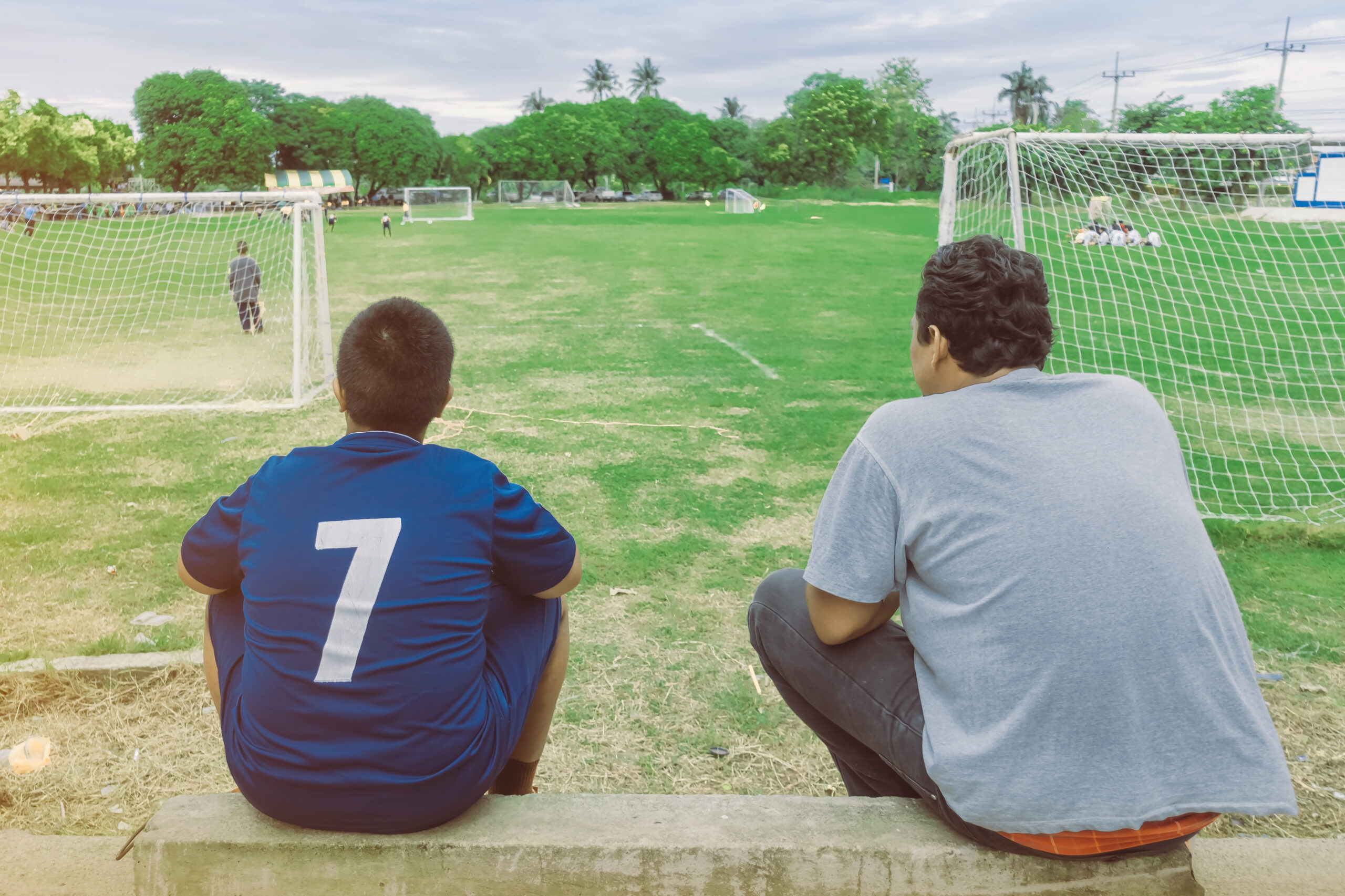

Sport for Life Resources for Parents
Kids who have fun playing a sport or taking part in physical activity are more likely to stay active and healthy for their entire lifetime. They are likely to develop a higher level of physical literacy and also have a better chance to pursue excellence in sport. Designed properly, children’s sport can be fun, while providing exciting challenges and rich skill development.
If we make it fun, challenging and instructive, we can expect three results:
- More of our children will develop a higher level of physical literacy.
- More of our children will stay physically active throughout their lifetime.
- More of our children will reach the top ranks of amateur and professional competition if they choose the path for elite training.
Follow these tips to help your child get the most out of their sport experience:
For girls and boys of all ages and stages
- Talk to your child about their interests. Find out what physical activities or sports appeal to them.
- Recognize and respect your child’s reasons for playing a sport or practicing a physical activity. They might want to compete for medals and titles, or they might simply want to have fun and socialize through activity.
- Be positive when supporting your child, regardless of results. (Research has shown that children retreat from activity when their parents become demanding about results!)
- Support your child’s activities as a parent, not as a 24-hour coach. Your role is to assist with transportation, good nutrition, rest and balanced lifestyle.
- Support your child’s coaches and instructors. If you have questions or concerns other than physical safety, approach them when they are not busy coaching or instructing.
- Your child might pursue extra interests outside sport and physical activity, and things can get busy in a hurry. Help them to balance their time according to their best interests.
- Educate yourself on good nutrition and healthy lifestyle habits for your child. Consult sport and health websites, books, magazines and videos, and ask your child’s coach or instructor for guidance
Long Term Athlete Development Information for Parents
Doing what is best for your child is what LTAD is all about, and Canadian sport is working hard to develop LTAD plans for all sports.
What those plans tell us is that early specialization, and early intense training in most sports just doesn’t help the child develop to be the best they could possibly be.
Download the Long Term Athlete Development guide for parents

The purpose of this Code is to ensure a safe and positive environment (within Badminton Ontario’s programs, activities, and events) by making Individuals aware that there is an expectation, at all times, of appropriate behaviour consistent with Badminton Ontario’s core values. Badminton Ontario supports equal opportunity, prohibits discriminatory practices, and is committed to providing an environment in which all individuals are treated with respect.
Parents, Guardians and Spectators
13. In addition to section 8 (below), parents/guardians of individuals and spectators at events will have additional responsibilities to:
a. Encourage athletes to play by the rules and resolve conflicts without resorting to hostility or violence.
b. Never ridicule a participant for poor performance or practice.
c. Respect the decisions and judgment of officials and encourage athletes to do the same.
d. Not question the judgment or honesty of an official or a Badminton Ontario supervising member.
e. Respect and show appreciation to all competitors and to the coaches, officials, and other volunteers who give their time to the sport.
f. Keep off the Competition area and not interfere with events or calls.
Responsibilities
8. Individuals have a responsibility to:
a. Maintain and enhance the dignity and self-esteem of Badminton Ontario members and other individuals by:
i. Demonstrating respect to individuals regardless of body type, physical characteristics, athletic ability, age, ancestry, colour, race, citizenship, ethnic origin, place of origin, creed, disability, family status, marital status, gender identity, gender expression, sex, and sexual orientation
ii. Focusing comments or criticism appropriately and avoiding public criticism of athletes, coaches, officials, organizers, volunteers, employees, or members
iii. Consistently demonstrating the spirit of sportsmanship, sport leadership, and ethical conduct
iv. Acting, when appropriate, to correct or prevent practices that are unjustly discriminatory
v. Consistently treating individuals fairly and reasonably
vi. Ensuring adherence to the rules of the sport and the spirit of those rules
b. Refrain from any behaviour that constitutes harassment, where harassment is defined as comment or conduct directed towards an individual or group, which is offensive, abusive, racist, sexist, degrading, or malicious. Types of behaviour that constitute harassment include, but are not limited to:
i. Written or verbal abuse, threats, or outbursts
ii. The display of visual material which is offensive or which a reasonable person ought to know is offensive in the circumstances
iii. Unwelcome remarks, jokes, comments, innuendo, or taunts
iv. Leering or other suggestive or obscene gestures
v. Condescending or patronizing behaviour which is intended to undermine self-esteem, diminish performance or adversely affect working conditions
vi. Practical jokes which cause awkwardness or embarrassment, endanger a person’s safety, or negatively affect performance
vii. Any form of hazing
viii. Retaliation or threats of retaliation against an individual who reports harassment
ix. Bullying
x. Offensive or intimidating phone calls or emails
xi. Displaying or circulating offensive pictures, photographs or materials in printed or electronic form
xii. Psychological abuse
xiii. Discrimination
xiv. Words or actions which are known or should reasonably be known to be offensive, embarrassing, humiliating, demeaning or intimidating
xv. Behaviours such as those described above are not directed towards a specific individual or group but have the same effect of creating a negative or hostile environment
c. Refrain from any behaviour that constitutes violence, where violence is defined as the exercise of physical force, that causes or could cause physical injury; an attempt to exercise physical force that could cause physical injury; or a statement or behaviour that it is reasonable to interpret as a threat to exercise physical force. Types of behaviour that are applicable to this section include, but are not limited to:
i. Verbal threats to attack
ii. Sending to or leaving threatening notes or emails
iii. Making threatening physical gestures
iv. Wielding a weapon
v. Hitting, pinching or unwanted touching which is not accidental
vi. Throwing an object
vii. Blocking normal movement or physical interference, with or without the use of equipment
viii. Any attempt to engage in the type of conduct outlined above
d. Refrain from any behaviour that constitutes sexual harassment, where sexual harassment is defined as unwelcome sexual comments and sexual advances, requests for sexual favours, or conduct of a sexual nature. Types of behaviour that constitute sexual harassment include, but are not limited to:
i. Sexist jokes
ii. Sexual violence
iii. Display of sexually offensive material
iv. Sexually degrading words used to describe a person
v. Inquiries or comments about a person’s sex life
vi. Unwelcome sexual flirtations, advances, or propositions
vii. Inappropriate sexual touching, advances, suggestions or requests
viii. Unwanted physical contact including, but not limited to, touching, petting, pinching, or kissing
ix. Unwelcome sexual flirtations, advances, requests, or invitations
x. Physical or sexual assault
e. Abstain from the non-medical use of drugs or the use of performance-enhancing drugs or methods. More specifically, Badminton Ontario adopts and adheres to the Canadian Anti-Doping Program. Any infraction under this Program shall be considered an infraction of this Code and may be subject to further disciplinary action, and possible sanction, pursuant to Badminton Ontario’s Discipline and Dispute Resolution Policy. Badminton Ontario will respect any penalty enacted pursuant to a breach of the Canadian Anti-Doping Program, whether imposed by Badminton Ontario or any other sport organization.
f. Refrain from associating with any person for the purpose of coaching, training, competition, instruction, administration, management, athletic development, or supervision of the sport, who has incurred an anti- doping rule violation and is serving a sanction involving a period of ineligibility imposed pursuant to the Canadian Anti- GA06 – 3 Doping Program and/or the World Anti-Doping Code and recognized by the Canadian Centre for Ethics in Sport (CCES).
g. Refrain from the use of power or authority in an attempt to coerce another person to engage in inappropriate activities
h. Refrain from consuming alcohol, tobacco products, or recreational drugs while participating in Badminton Ontario programs, activities, competitions, or events
i. In the case of adults, avoid consuming alcohol in situations where minors are present and take reasonable steps to manage the responsible consumption of alcohol in adult-oriented social situations associated with Badminton Ontario’s events
j. Respect the property of others and not willfully cause damage
k. Promote the sport of badminton in the most constructive and positive manner possible
l. Adhere to all federal, provincial, municipal and host country laws
m. Comply, at all times, with Badminton Ontario’s bylaws, policies, procedures, and rules and regulations, as adopted and amended from time to time
n. In the case of Minors, not consume alcohol, tobacco, or cannabis at any competition or event
o. Refrain from engaging in deliberate cheating which is intended to manipulate the outcome of a para-classification, competition, and not offer or receive any bribe which is intended to influence the outcome of a competition